Thursday, June 2, 2016

Prospects for the 2016 Purple Emperor Season

My predictions for the forthcoming season -

1  They're unlikely to start before 1st July, as larvae came out of hibernation and commenced feeding late due to the cold April, and have since been further held up by periods of cold weather.  This timing could change if we get a very hot June, so there is a chance of the first males appearing at early sites in late June (e.g. in Sussex and Surrey).  

At present, larvae at Knepp in West Sussex are only in the early to mid stages of the final instar - they need another week of feeding, time to pupate, and then an average 18 days as pupae.  

2  Numbers may not be high because last year's egg lay was poor, larval mortality in the autumn was unusually high, there was another pulse of mortality in late winter, and spring was fairly inclement (with many cold evenings, which inhibited feeding).

But much depends on flight season weather and I predicted a poor emergence in 2013, only for the butterfly to emerge in remarkably good numbers.  Also, there's no such thing as a bad Purple Emperor season: other species have bad seasons, this one only deals in superlatives... 

Watch this space for updates...

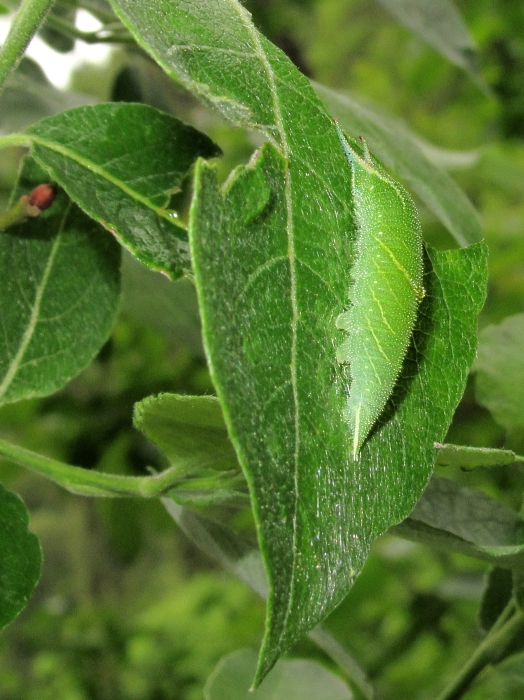
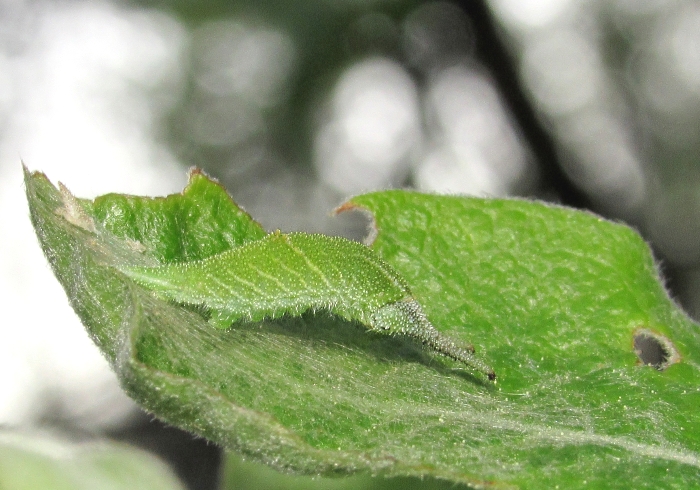
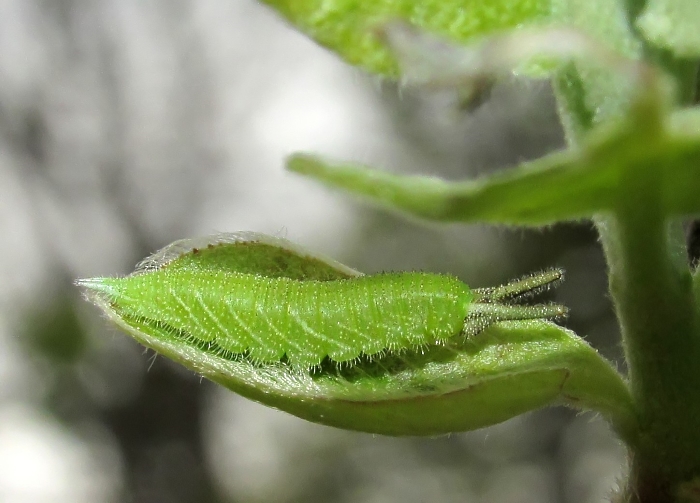
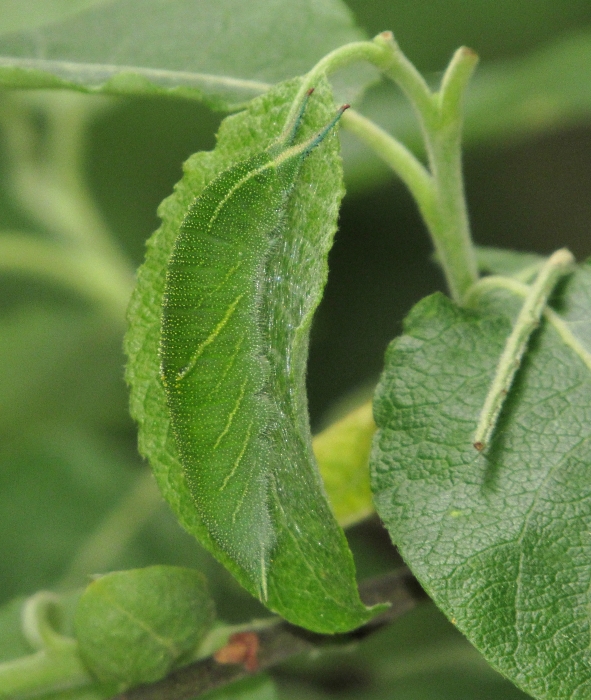
Here's a mid-final instar larva I found at Knepp on Monday (named 'Sir Vauncey Harpur Crewe' after the most barking mad and OCD collector of all time...) -


Wednesday, June 1, 2016

Growing up

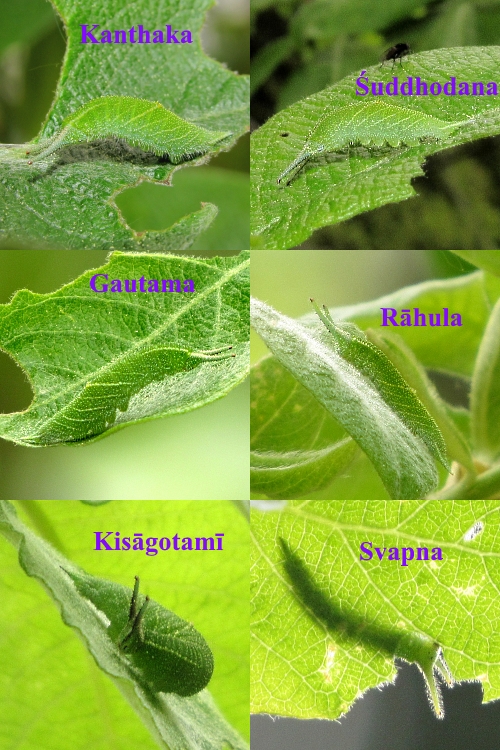
All the caterpillars I can still locate are now 5th instar. In this instar they wander a lot and it has been hard keeping track of them. I cannot find Gautama, who was the first to reach 5th grade, but have no reason to believe he has not simply moved higher up the tree.

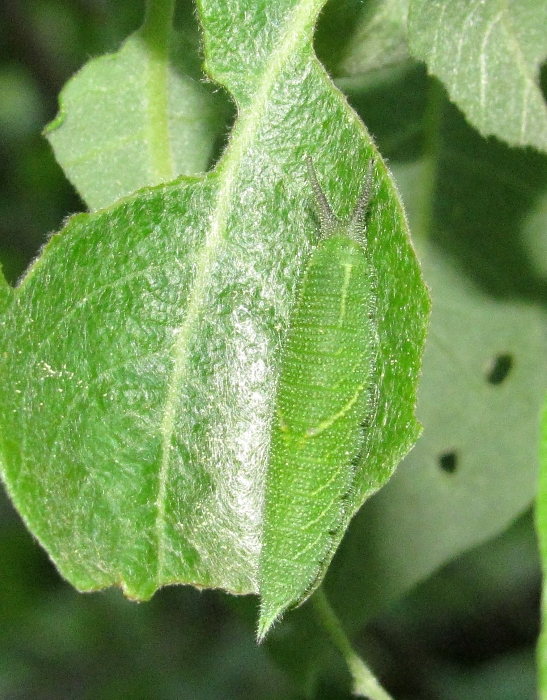
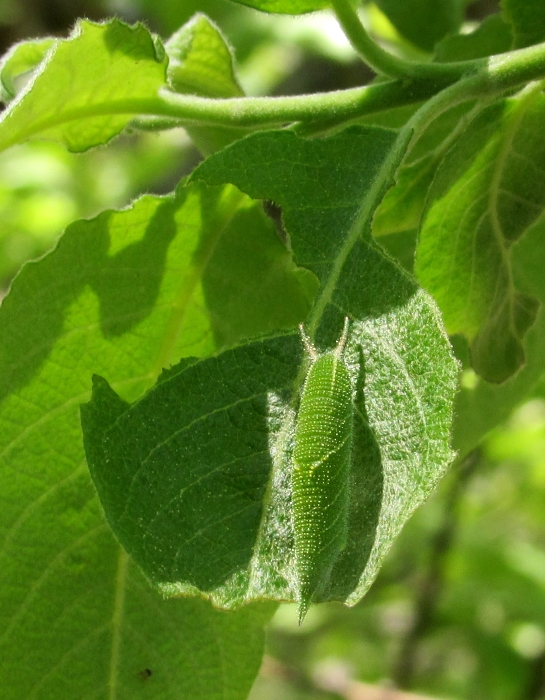
Of those I can still find, Kisāgotamī is the most mature. She turned 5th instar on the night of 21st-22nd May and so is about one week away from moving off to pupate. This was her this evening:


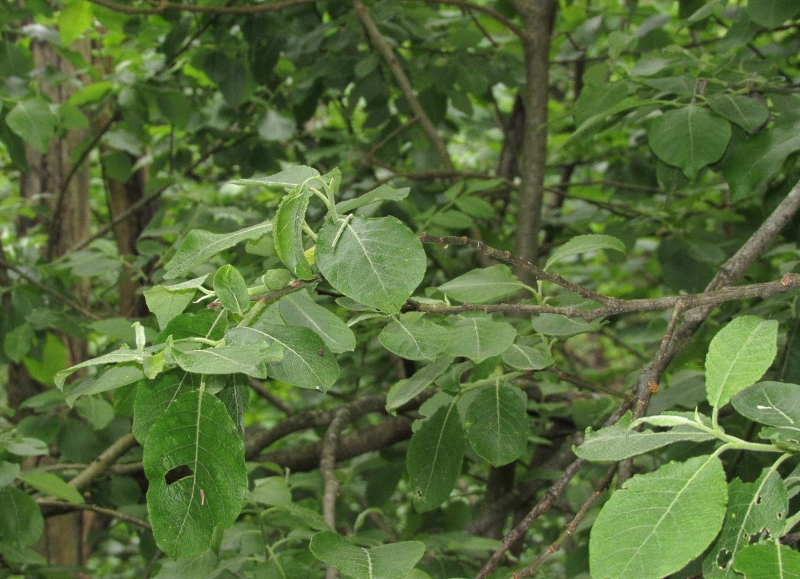
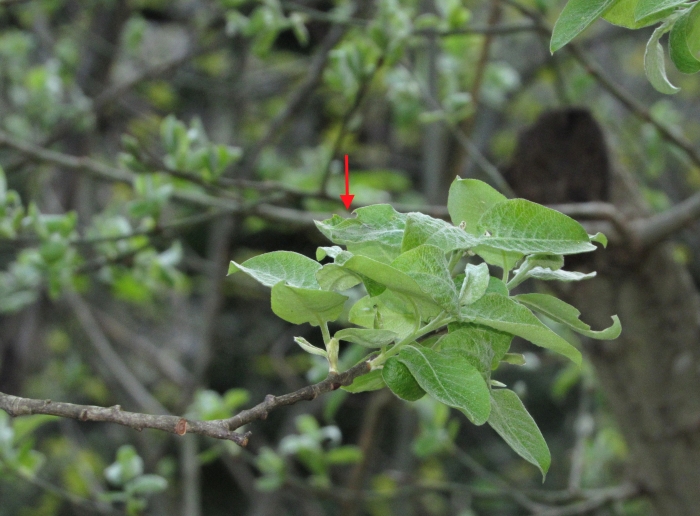
This picture shows how difficult it is to spot a cat even when it is as big as her:


She's in there ...

This is Rāhula, who shed his skin this morning:


The last two are Kanthaka and Svapna, both photographed yesterday:


Guy


Saturday, May 21, 2016

5th instar

The first of the six caterpillars I'm watching - Gautama - has reached the fifth and final instar. This photo was taken this evening, after I got back from a day trip butterfly-hunting:


Two days ago, his leaf weighed down by the rain, he looked like this:


Yesterday, he was still laid up. Thus, I know he ecdysed today (or last night) - exactly two weeks after his last transition. If he spends the usual 17-18 days in fifth instar, then a couple more preparing to pupate, we are looking at a June emergence. One other caterpillar, Kisāgotamī, has been laid up a day longer than Gautama but still not shed her skin. This was her tonight:


Guy

EDIT: As expected, Kisāgotamī had shed her skin by the time I checked on her this morning, 22nd May:


Wednesday, May 11, 2016

Snapshot of 11th May

I did an inventory of all my purple emperor cats on my lunchtime walk today (11th May). All are fourth instar. Some are inaccessible but I tried to get a flesh shot of them all.


Gautama is the only one I followed through the winter. I had feared disaster after finding no eggs last year and just two caterpillars, one of whom died. But it seems the females just laid their eggs in different places from usual during the heatwave of July-August 2015.

Kisāgotamī and Gautama are about an inch long. Kanthaka and Śuddhodana are a little smaller. Rāhula and Svapna are too high in their trees for me to be able to judge size accurately.

This was Kisāgotamī yesterday, looking all grown up:


Guy

Monday, May 9, 2016

Late Start...

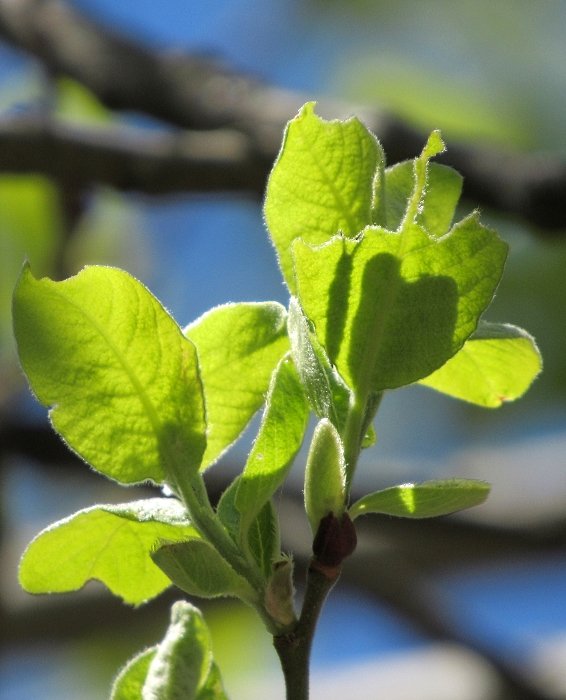
The last ten days of April were very cold, with frosts down south. Consequently, Purple Emperor larvae did not commence feeding until the weather warmed up at the start of May. That's late, very late by modern standards. Although they can catch up if May is fine, at this rate the butterfly is unlikely to appear before the start of July - but watch this space.

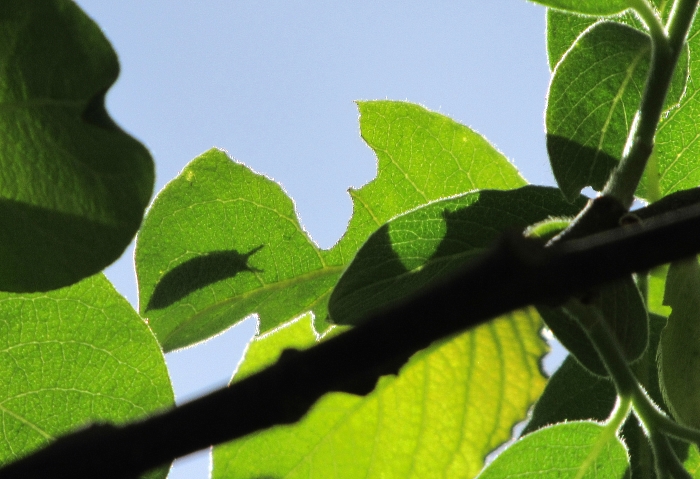
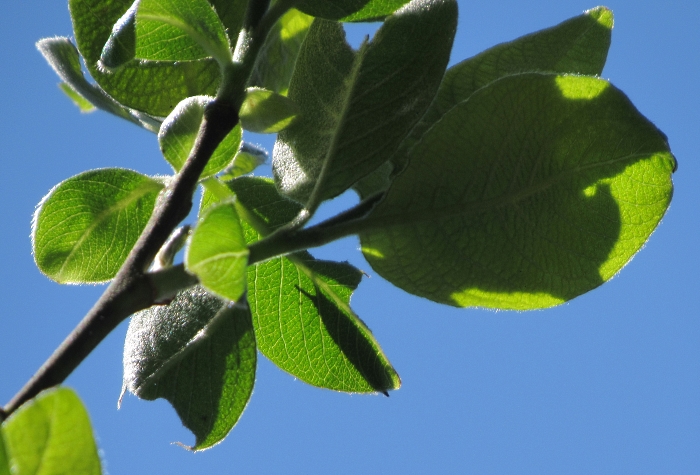
Guy is absolutely right, larvae can be found on sunny days in May by spotting their silhouettes through the foliage. Also, in early May few other Lepidoptera larvae are feeding on sallow leaves, so homing in on any edge-of-leaf or leaf-removal feeding can be rewarding - if you can take the eyestrain.  Do it on calm days only.    

Here is Sir Cloudsley Shovell, photographed in Savernake on Sun 8th, he will soon change into the 4th instar - 


I also found one which I thought had been predated in late winter. He had only just started to feed and has scarcely grown -


Friday, May 6, 2016

4th instar

Deep in a Swiss forest, at least one caterpillar has graduated to 4th instar. All the others I have found are still 3rd instar. Here is Kisāgotamī:


Her discarded skin can be seen at her tail. She is still small but will now grow fast before moulting again in about two weeks into her final larval stage.


Both these pictures were taken in the early evening, after the sun had set.

Guy


Wednesday, May 4, 2016

More shadow play

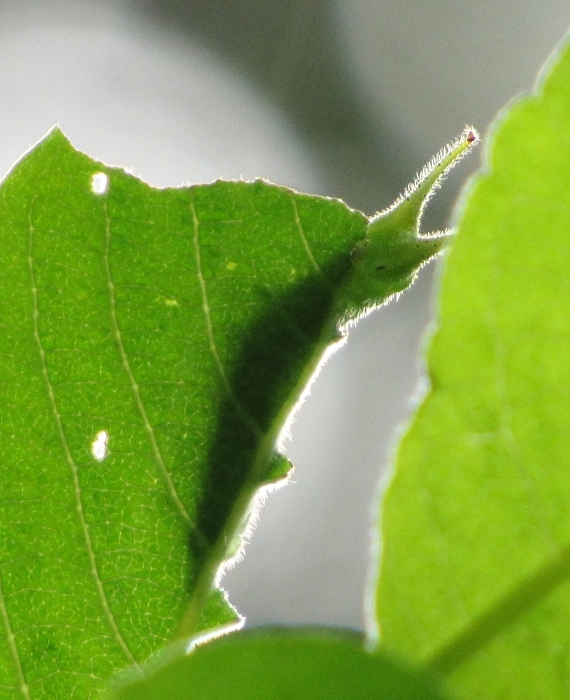
At this time of year, before the canopy becomes dense, it is surprisingly easy to spot purple emperor caterpillars high in the sallows by looking for their silhouettes on leaves illuminated by the sun. Here are two (Śuddhodana and Rāhula) I've found in the last week or so:


As they get bigger and the leaves more pendulous I should be able to get shots of them in the flesh  but for the time being they are only visible when the sun shines.

They are both presumed 3rd instar. At about this time last year I found a 4th instar (Nakula) in the same way:


The caterpillar I followed through last winter (Gautama) is still thriving. He should soon graduate to 4th instar:


In general, caterpillars are fewer and further between than last year but I imagine there are enough, scattered throughout the forest, to carry the species through into 2017 ...

EDIT:

Another, Kanthaka, spotted on 5th May:


Guy